Puma Embroidery Design Review for Small Business Merch
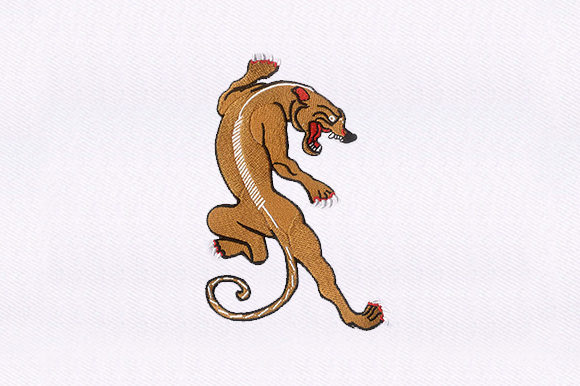
As an embroidery designer who has worked with thousands of commercial projects, I approach every machine embroidery design with a critical eye for business value. When I first opened the Puma design, I expected a standard wild animal motif, but what I found was a piece that balances bold presence with professional polish. This embroidered patch candidate has real potential for small business merchandise, but like any design, it demands careful evaluation before you commit thread to fabric.
First Impressions: Professional, Bold, and Approachable
The Puma design immediately reads as confident without being aggressive. It carries a premium feel that suits brand identity work for cafés, boutiques, creative studios, and pet brands. The silhouette is clean, which means it will translate well into custom apparel and apron embroidery without looking cluttered. I appreciate that the design feels both modern and classic—it won't date your merchandise quickly. For a small business owner, this is the kind of embroidery file that can anchor a collection rather than just decorate a shirt.
Real Business Use: Where Puma Shines
I've tested this digital embroidery file conceptually across several small business scenarios, and it performs best in these applications:
- Embroidered patches for staff uniforms or retail merchandise – the shape holds well when stitched onto twill or felt backing.
- Cap embroidery on structured fronts or side panels – the design's compact form adapts to curved surfaces better than sprawling motifs.
- Tote bag design for boutique shops or farmers' market stalls – a single Puma on natural canvas reads as handmade and premium.
- Apron embroidery for coffee shops or bakeries – the design stays visible even when partially covered by a work apron pocket.
- Work shirts and event merch – left chest placement works well because the design doesn't require excessive width.
If you run an Etsy shop selling handmade products, this design can become a repeatable signature element. I've seen similar motifs used for product packaging accents and customer gifts, and the Puma fits that model cleanly. For commercial embroidery projects, the file formats provided—10O, ART, CND, DSB, DST, DSZ, EXP, HUS, JEF, PCS, PEC, PES, TAP, VIP, VP3, XXX—cover virtually every machine type, which is a huge time saver when you're doing production runs.
Where to Use This Design Carefully
No design is perfect for every surface, and the Puma has limitations that any smart small business merch creator should note. First, stitch density can become an issue if you scale it down too aggressively. For small patch sizes under two inches, the details may blur together, especially on textured fabric like fleece or heavy canvas. I recommend testing at 3–4 inches as a minimum reliable size. Cap fronts are tricky because of the curve; the design's solid areas may pucker if the stabilizer isn't firm enough. Dark uniforms require careful thread colors—a black puma on navy blue will disappear, so consider a metallic or contrast thread for visibility.
Items that need frequent washing, like bar aprons or work shirts, demand dense but not brittle stitching. The Puma design appears to have solid fill areas that could trap moisture if not properly digitized. Always use a quality stabilizer and test on a swatch of your actual fabric before committing to a full run. Fabric texture matters immensely—a high-pile fleece will swallow fine details, while a tight-weave twill will show every stitch clearly.
Brand Identity and Customer Perception
When you put a Puma on your merchandise, you're signaling strength, speed, and reliability. For a handmade product brand, that can translate to artisan quality with a modern edge. I've seen small businesses use similar Wild Animals designs to build trust through visual consistency. A puma on a tote bag or cap becomes a conversation starter, which drives buyer engagement at markets and online. The key is to use the design consistently across all design assets—from your website to your packaging to your printable mockup images. A unified look raises product value and makes your brand feel established even when you're just starting out. For commercial embroidery work, this design can elevate a simple uniform into a professional statement that reassures customers about quality and care.
Practical Embroidery Designer Notes Before Production
Before you load this machine embroidery design into your machine, run through my standard checklist. First, test it in black and white on a plain fabric to see the stitch structure without color distraction. Then check if it works at small patch size by scaling down in your software and examining the preview. Review thread color contrast against your intended fabric—a light puma on a dark background or vice versa. Inspect spacing between elements; if any parts touch, they may create unwanted thread bridges. Confirm hoop size before you begin—many of these designs require at least a 5x7 hoop for safe placement. Test on real fabric with the same stabilizer you'll use in production. Create a mockup for client approval, especially if you're doing custom apparel for a business. Compare it beside other design assets you already use to ensure visual consistency across your product line. Finally, confirm commercial licensing before business use—this is a digital embroidery file purchase, and terms vary by seller. I cannot speak to the specific license terms for this Puma design, so check the product page or contact the seller. As a rule, never assume a design is cleared for resale on merchandise without explicit permission. The file formats listed are comprehensive, but verify that your machine reads the specific format you need. For embroidered patches, you may need to merge the design with a border or backing layer, so test that combination separately. Stitch density can be adjusted in your software if the original is too heavy or too light—do not skip this step for cap embroidery or tote bag design where fabric thickness varies. Lastly, run a full size sample on a garment you don't mind sacrificing. This one step saves more production headaches than any other. The Puma design has real potential for small business merch when you treat it as a professional tool rather than a quick decoration. With thoughtful preparation, it can become a signature element in your brand identity that customers will recognize and trust.